
New Outlook for Windows - Here's What You Need to Know
Microsoft’s New Outlook for Windows
Whilst it became generally available in August 2024, the New Outlook is currently not supported by FirstClass due to integration limitations.
The New Outlook cannot facilitate outbound sending or importing of emails from other applications, and it does not yet provide the full functionality available in
Classic Outlook.
What this means for you:
- Computers running FirstClass must continue using Classic Outlook to maintain full functionality.
- Microsoft encourages users to try the New Outlook, so be aware of this prompt if you rely on FirstClass for email integration.
Guidance for users:
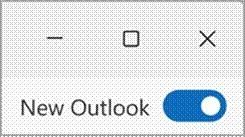
- Look for the New Outlook icon in the top-right corner of Outlook, see below
- Revert to Classic Outlook by clicking the slider to “off”, see below, and restart Outlook to switch back to Classic Outlook.
- For any issues with email integration, please contact our support team
FirstClass remains fully compatible with Classic Outlook. Users are advised to retain Classic Outlook until full support for the New Outlook is confirmed, which is supported by Microsoft until at least 2029.
Further details on extended support for classic Outlook can be found here.


The background Two decades with the National Trust, and still finding new ways to go further. The National Trust exists to protect and preserve places of historic and natural significance for future generations. It’s a mission built on the long view: on the belief that what’s worth having is worth caring for over time. It’s a philosophy that sits rather well with a twenty-year relationship with FirstClass. Legacy income of around £60 million a year funds the Trust’s core conservation work, protecting historic properties, caring for nature, and keeping some of Britain’s most loved places open for the people who love them. Managing that income, with around 1,200 cases open at any one time, demands a system that can carry the weight. FirstClass has been doing exactly that since the Trust was among the early adopters of FirstClass 2, growing alongside the product through successive versions. Jenny Alexander, who heads up legacy administration, leads a dedicated team, and among them is Kim Miles, a legacy officer who has been with the Trust for twenty-five years, using FirstClass for ten of those. Between them, the team brings years of FirstClass experience, whether at the Trust or across previous organisations, and a perspective on the system that is both broad and forensically detailed. Every Part of It Ask Jenny and Kim how they use FirstClass and the answer is straightforward: completely. Keywords for rapid searching, automation on reviews linked to case history and income, and custom reports built to their own specifications. Over two decades, the Trust has worked its way into every corner of the system, consistently looking for ways to make a complex operation run more smoothly.

The charities that benefit most from Remember a Charity Week aren't always the ones with the biggest budgets. They're the ready ones. Remember a Charity Week, running 7 to 13 September 2026, is the sector's most significant annual moment for legacy giving. Hundreds of charities, solicitors and campaign partners come together to celebrate and raise awareness of gifts in wills, reaching supporters at precisely the moment they're most receptive to the idea. But awareness alone doesn't convert. The charities that make the most of the week are the ones that have done the less visible work beforehand; the kind that doesn't appear in a campaign toolkit but makes the difference between interest and action. The Preparation Most Teams Overlook Campaign assets, social content, and staff briefings are necessary. They're also the first thing every charity thinks of. What gets less attention is the foundation underneath: the data. Remember a Charity Week is as much about reactivating existing relationships as it is about reaching new audiences. Many of your most likely legacy pledgers are already in your database. They've supported you for years, attended events, and responded to appeals. The question is whether your records are accurate enough to reach them meaningfully. Outdated mobile numbers, incorrect email addresses, deceased supporters still on mailing lists - each of these doesn't just represent a missed communication. In the context of legacy giving, where trust is everything, a misdirected message or a wrong name signals to a supporter that they are not truly known. That signal is hard to undo. Before the week arrives, it's worth asking: when did you last review the accuracy of your contact data? Are your mobile numbers current? Do you know which supporters have already indicated an interest in legacy giving, and when they were last contacted? Moments like Remember a Charity Week are a useful prompt. If data accuracy isn't something your team reviews regularly, a sector moment this significant is as good a reason as any to make it a priority, ahead of this week, and as a habit going forward. Meeting Supporters Where They Are Once your data is in good shape, the question becomes how to reach supporters during the week itself and through which channels. Email remains important, but it operates in an increasingly crowded inbox. For legacy teams looking to cut through during a busy awareness week, mobile messaging offers something different: immediacy, intimacy, and a read rate that email rarely matches. RCS , the successor to SMS, delivers branded, interactive messages directly to a supporter's phone, with read rates of 60-80% and engagement up to three times higher than standard SMS. A message sent during Remember a Charity Week directing a supporter to your gift in wills page, or to a Free Wills Month booking in October, lands in a channel they already trust and use every day. QR codes are equally underused in legacy communications. A code on an email footer, a social post, or any printed material can take a supporter directly to your legacy page in a single scan: no URL to remember, no delay between the impulse and the action. The supporter who wants to give is already there. The only thing standing between that feeling and a completed action is making it easy. Through our sister brand Cymba , which brings over 20 years of messaging expertise for charities, we're already helping legacy fundraising teams build mobile campaigns that reach supporters at exactly the right moment. If your charity is already working with Cymba on regular giving or text-to-donate, the infrastructure to extend that into legacy communications is closer than you might think. For more on the channels and audiences most relevant to legacy giving right now, our article on Gen X and legacy fundraising is worth a read. The Bridge to Free Wills Month Remember a Charity Week and Free Wills Month in October are two separate moments. But they can equally be seen as stages of the same campaign. The groundwork laid consistently throughout the year, at moments like these and the ones that follow, is what determines how well you capitalise on them when it matters most. The awareness built during the week, through social content, supporter emails and mobile messaging, primes supporters for the practical next step that Free Wills Month offers. A supporter who receives a thoughtful, well-timed message in September and is directed to your gift in Wills page is far more likely to act when Free Wills Month opens than one who encountered your legacy programme for the first time in October. Ready When the Moment Arrives The organisations best placed to make the most of events like Remember a Charity Week are the ones with the right infrastructure already in place: a clear view of their supporter data, the confidence to reach people through the channels that actually work, and the case management foundation to handle what follows. Together, FirstClass and our data cleansing team give legacy professionals the pipeline visibility, case management, and clean data that makes every communication count. And through our sister company Cymba, the mobile messaging capability to reach supporters where they already are is closer than most teams realise. If Remember a Charity Week or Free Wills Month have prompted some useful thinking, that's exactly the point. The most effective legacy programmes aren't built in a week; they're built on consistent foundations for when these events arrive, everything is already in place. If any of the ideas here are worth exploring for the coming months or the year ahead, we'd be glad to talk.

Legacy administration carries a hidden cost. Here's what it's really taking up, and what legacy professionals could be doing instead . Ask anyone who manages legacy administration what their day looks like and the answer rarely starts with relationships. It starts with paperwork. Documents to upload, correspondence to chase, reports to pull together, dates to track. The work is necessary and important. But for many legacy professionals, it quietly crowds out the things that matter most. That trade-off deserves more attention than it gets. Legacy giving is one of the most relationship-driven forms of philanthropy there is. The supporters who include a charity in their will do so out of deep, long-standing connection. Honouring that connection takes time, care and presence. Yet the administrative burden of managing legacy income can leave little room for any of it. The Administration Behind Every Gift Every legacy gift generates a significant amount of work before any income is received. Documents arrive from solicitors and need to be logged, stored and acted upon. Correspondence passes between multiple parties, including executors, solicitors, financial advisors and families, often over months or years. Financial reports need to be produced for trustees and auditors. Key dates need to be tracked so nothing falls through the gaps. For larger charities with dedicated teams, that workload is distributed. For smaller organisations, it often falls to one person. That person is also likely to be managing supporter relationships, attending sector events, and contributing to broader fundraising strategy. The hours spent on administration are hours not spent on any of those things. What Gets Crowded Out The hidden cost of administration is not just inefficiency. It is opportunity. Every hour spent uploading documents or chasing correspondence is an hour not spent building the relationships that become tomorrow's legacies. Legacy stewardship, by its nature, is a long game. The supporters most likely to leave a gift are those who feel genuinely known and valued by an organisation over many years. That kind of connection takes consistent, personal attention. It also takes confidence. When a legacy professional knows that every case is properly recorded, every date is flagged, and every financial report is accurate and accessible, they can engage with solicitors, executors and families with authority. When they are not sure whether the information is up to date or complete, that confidence erodes. And the people on the other side of those conversations notice. A Different Way of Working The organisations that manage legacy administration well tend to have one thing in common: a system that handles the administrative burden so the people do not have to. Not by removing the human element, but by giving it the space it needs. That means rapid access to records without searching through files or spreadsheets. Income dashboards that give an immediate picture of the pipeline and expected income. Financial reports that are ready when they are needed. Important dates flagged automatically. And correspondence and case notes held in one place, so nothing is ever lost or disconnected from its context. When those things are in place, the time equation changes. Administration becomes faster, more reliable, and less draining. And the time that is recovered goes back where it belongs: into the relationships, the stewardship, and the work that only a person can do. Built for the Reality of Smaller Organisations For smaller charities, universities , arts organisations and heritage bodies, that kind of professional infrastructure has not always felt accessible. Enterprise systems carry enterprise complexity and cost. For many organisations, the gap between a spreadsheet and a full legacy management platform has felt too wide to bridge. FirstClass 5 Essentials was built precisely for this. Cloud-hosted, ready from day one, and priced for organisations that don't need enterprise complexity. The Right Use of Time Legacy administration will always require care and attention. That is not something any system can or should remove. But the hours spent on the purely administrative parts of the job - the uploading, the chasing, the reporting - are hours that could be spent differently. If you would like to see what FirstClass 5 Essentials looks like in practice, we would be glad to show you.
